

3 Reasons to Use a Strengths-based Approach in Healthcare
Balancing with focusing on “what’s wrong?” with “what’s right?” can help patients feel more empowered in their own health management. This blog makes a case for using a strengths-based approach in healthcare.
Written by Anna Wong
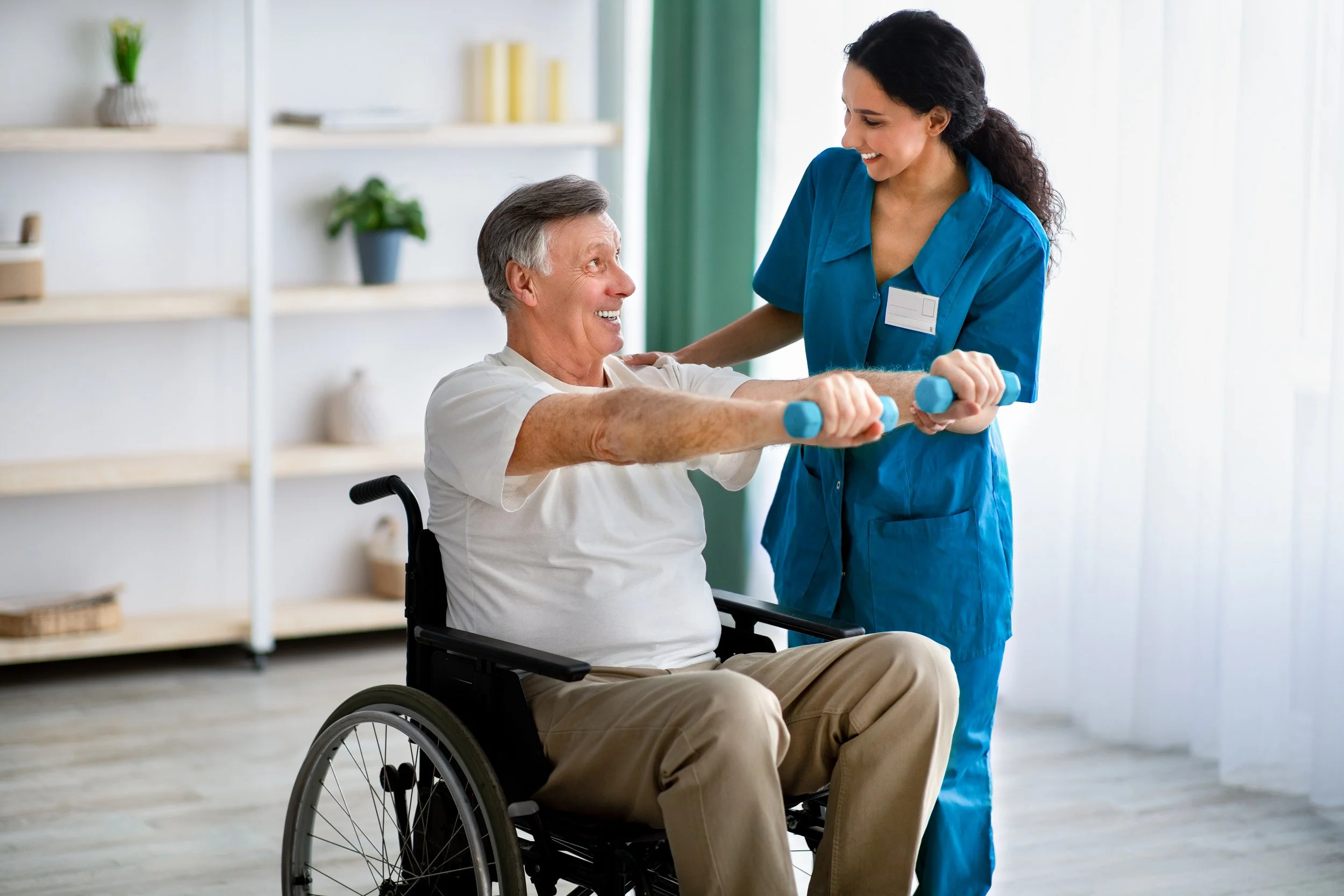
What if the most powerful tool for improving patient outcomes in rehab is not a new exercise or manual technique, but rather a deliberate shift in how we see and interact with the people in our care?
A strengths-based approach invites rehabilitation clinicians to move from “what is wrong” with this person to also asking “what is right?” in each person.
Instead of only identifying risk factors, what if we also systematically identified protective factors? And help patients build upon those protective factors?
3 Reasons Why a Strengths-Based Approach Works in Rehabilitation
1. Strengths Are a Protective Resource When Patients Face Their Most Difficult Moments
Rehabilitation patients frequently face uncertainty, functional loss, and a diminished sense of identity. This is especially true with a life-changing diagnosis like cancer, stroke, traumatic brain injury, and other chronic diseases. Research shows that character strengths such as hope, zest, and gratitude serve as meaningful protective factors across a range of clinical populations.
In a study of individuals with multiple sclerosis, these three strengths were the most strongly correlated with quality of life, even after accounting for fatigue and depression (Smedema, 2020). Among Spanish women diagnosed with breast cancer, zest and hope emerged as key predictors of life satisfaction (Soria-Reyes et al., 2023). In individuals recovering from acquired brain injury, the use of character strengths was correlated with improved perception of functional ability and quality of life (Bertisch et al., 2014), and positive attributes were associated with greater life satisfaction and community integration following traumatic brain injury (Hanks et al., 2014). Identifying these strengths early in the rehabilitation process gives clinicians and patients a shared resource to draw on throughout recovery, regardless of diagnosis.
2. Recognizing Strengths Build Self-Efficacy
Self-efficacy can be defined as the belief in oneself to achieve goals. A patient who does not believe in their capacity to effect change with their own health is unlikely to engage fully in the rehabilitation process, regardless of the quality of the clinical intervention.
Strengths-based interventions have been associated with increased self-efficacy, improved self-esteem, and reduced depression among individuals with chronic illnesses (Yan et al., 2020).
In a randomized controlled trial, a two-week journaling intervention focused on the character strength of zest led to increased self-efficacy and improved capacity to function despite chronic pain (Graziosi et al., 2020). Focusing on what a patient already does well positions them as an active participant in their own recovery.
In Practice: When setting rehabilitation goals, invite the patient to name a strength they have already demonstrated in daily life, then explore together how that strength can support their recovery plan.
3. Strengths-Based Interventions Reduce Psychological Distress, Even in Brief Formats
Rehabilitation clinicians may assume that addressing psychological well-being falls outside their scope or requires lengthy intervention. Research challenges this assumption. Older adults with chronic physical disabilities who received just two one-hour strengths-based sessions demonstrated significant reductions in distress compared to a control group, with results achieved within seven days (O'Donnell, 2013). Brief, intentional conversations about strengths, gratitude, and life satisfaction can have a meaningful impact within the time constraints of a typical rehabilitation encounter.
In Practice: Close each session with one prompt: "What is one thing you did well with your exercises lately?" This small shift redirects attention from limitations to demonstrated capability.
Take-Away Action
This week, add one strengths-based question to your subjective history interview:
Eg. “In the past, when you have exercised or did rehab regularly, what helped you to stick to it?”
Listen very closely for personal strengths (perseverance, time management, willingness to learn), resources (access to a gym or equipment), social support (joining a group class, friends to exercise with).
Document it alongside your clinical findings.
The strengths your patients name can help personalize their rehabilitation, based on their unique protective factors, to improve their self-efficacy and engagement in rehab. For example, some patients do well with exercises on their own, but some others may thrive in a more structured group setting.
References and Suggested Readings
Bertisch, H., Rath, J., Long, C., Ashman, T., & Rashid, T. (2014). Positive psychology in rehabilitation medicine: A brief report. NeuroRehabilitation, 34(3), 573–585. https://doi.org/10.3233/NRE-141059
Graziosi, M., Yaden, D., & Nawijn, J. (2020). Zest and self-efficacy in patients with chronic pain: A randomized controlled trial. Journal of Positive Psychology, 15(6), 748–758.
Hanks, R. A., Rapport, L. J., Wertheimer, J., & Koviak, C. (2014). Randomized controlled trial of peer mentoring for individuals with traumatic brain injury and their significant others. Archives of Physical Medicine and Rehabilitation, 95(6), 1049–1057. https://doi.org/10.1016/j.apmr.2014.01.007
Niemiec, R. M. (2018). Character strengths interventions: A field guide for practitioners. Hogrefe Publishing.
O'Donnell, M. (2013). Strengths-based intervention for older adults with chronic physical disabilities in inpatient rehabilitation [Unpublished doctoral dissertation]. Widener University.
Smedema, S. M. (2020). Quality of life and character strengths in multiple sclerosis. Rehabilitation Psychology, 65(1), 28–36. https://doi.org/10.1037/rep0000299
Soria-Reyes, L. M., Cerezo, M. V., Molina, P., & Blanca, M. J. (2023). Life satisfaction and character strengths in women with breast cancer: Zest and hope as predictors. Integrative Cancer Therapies, 22. https://doi.org/10.1177/15347354231197648
Weziak-Bialowolska, D., Bialowolski, P., & Niemiec, R. M. (2021). Being good, doing good: The role of honesty and integrity for health. Social Science and Medicine, 291. https://doi.org/10.1016/j.socscimed.2021.114494
Yan, Z., Guo, X., Lee, J., & Yeung, J. W. (2020). Character strengths-based interventions in clinical settings: A systematic review. Journal of Positive Psychology, 16(5), 635–651.
Suggested Further Reading
Niemiec, R. M. (2018). Character strengths interventions: A field guide for practitioners. Hogrefe Publishing.
Peterson, C., & Seligman, M. E. P. (2004). Character strengths and virtues: A handbook and classification. Oxford University Press / American Psychological Association.
VIA Institute on Character. (n.d.). Character strengths and health, wellness, and medicine: Research findings. https://www.viacharacter.org/research/findings/character-strengths-and-health-wellness-and-medicine