

The Art of Workshop Facilitation Part 1: Group Sizing and the Role of Gathering
Written by Anna Wong
This is the first post in a series where I'm putting together everything I've learned about what makes group learning experiences work. This includes my formal education during my Bachelor of Education where I learnt how to design lessons and teach. Facilitation for adult learners courses from University of Toronto. My outstanding learning experience in completing my Master in Applied Positive Psychology at University of Pennsylvania. But, importantly, also my non-academic experiences such as taking improv classes and hosting dinner parties, that inspire me to think about how to facilitate transformational experiences for groups.
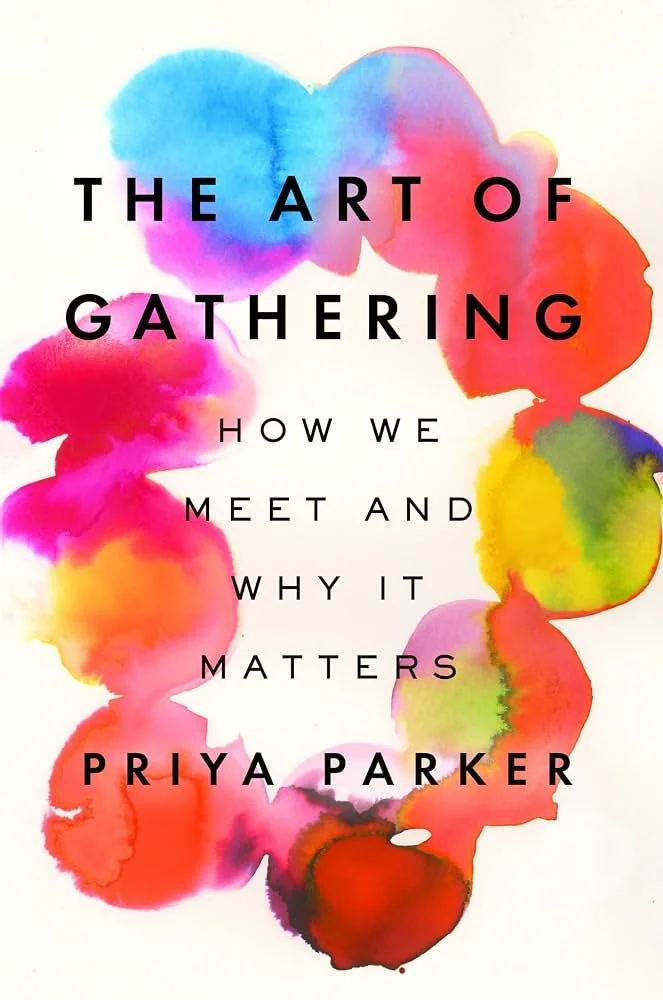
In this post, I want to share what I took away from Priya Parker's book, The Art of Gathering, and how those ideas apply directly to facilitating a workshop, especially the idea of group size, which changes more about the experience than people usually realize.
The Host in the Room
Think about the moment a workshop or event starts. People are walking in, most of them don't know each other, they're not sure where to sit, and they're definitely not sure what to really do. That moment sets the tone for everything that comes after it. As facilitators, we often skip right past it to get to the content.
But in that moment, a facilitator is doing the same thing a good host does when people arrive at their home. You're reading the room, making introductions, letting people know what kind of space this is going to be, and taking on the job of making sure everyone feels comfortable. Facilitation is really an act of hospitality. The content matters, sure, but the room only becomes a place where people can actually learn and grow if someone takes responsibility for holding it.
That's the idea that runs through Priya Parker's book, The Art of Gathering. And it turns out to be a useful way to think about facilitation, not just event planning.
Five Takeaways from The Art of Gathering
1. Have a specific purpose, not a vague one
Parker makes the point that most gatherings don't work because the purpose behind them is too broad. Things like "let's connect" or "let's learn together", ""team building”, or “professional development” sound fine, but they don't actually help you make decisions about who to invite, what to include, or what to leave out. A specific purpose gives you something to design around.For facilitators, this means naming the actual outcome before you build the agenda.
2. Take on authority for the group's sake
One point Parker makes that stuck with me is that good hosts don't step back and disappear. They take on authority on behalf of the group, and they use it to protect the purpose of the gathering and the people in the room, even if that means stepping in when needed. She calls this generous authority. It's about using your role to serve the group, not to serve yourself.
As a facilitator, this shows up when one person is dominating the conversation, or when the discussion drifts away from what people actually came for. Your job isn't to stay neutral and hope it works itself out. It's to step in and guide things, on behalf of everyone else in the room.
3. Group size changes the intimacy level
This might be the most useful idea in the book, and it's one that doesn't get talked about enough. Parker points out that group size isn't just a logistics question. It changes what kind of interaction is even possible.
6 people: good for intimacy, high levels of sharing, and storytelling. Not great for diversity of viewpoint.
12 to 15 people: still small enough to build trust and intimacy, and small enough for one moderator to handle, but large enough to bring in a real diversity of opinion. Parker notes this is also around the size where startups tend to start having "people problems" as they grow.
30 people: starts to feel like a party. Too big to sustain one single conversation unless you have a skilled facilitator (or two) running it.
100 to 150 people: the range conference organizers most often point to as ideal. Trust and intimacy can still be felt at the level of the whole group, right up to the point where it starts to feel more like an audience than a gathering.
For facilitators, this means group size is a design choice, not just a headcount you work around. If you want a personal, honest exchange (say, clinicians talking through a hard patient case), a workshop of forty people needs smaller breakout structures built in to get back to that intimacy. If the goal is broad exposure to ideas, then a bigger group might actually serve the purpose better than a small one. The mistake is designing for one group size while expecting the outcome of a different one.
4. Saying no to some people can make the experience better for everyone else
Parker argues that trying to include everyone often makes the experience worse for the people who actually need to be there. A clearly defined group, even if it means turning some people away, tends to create a more focused, higher trust experience.T his one is a little uncomfortable to sit with, but I think it's true. A workshop trying to serve both beginners and experts at the same time usually doesn't fully serve either group. Being clear about who a session is actually for, and saying so directly, is a way of respecting people's time and trust.
5. The way you open and close matters more than we think
Parker spends a good amount of time on the first and last moments of a gathering, and she makes the case that most hosts don't put enough thought into either one. A good opening sets the tone and lets people know how to show up. A good closing helps people process what happened and take it with them, instead of the group just ending when the clock runs out.
For workshop facilitators, this is worth paying attention to. A lot of sessions spend the opening on logistics, like the agenda and where the bathrooms are, instead of using that time to set the tone. And closings often get cut short because the session ran long, which means people don't get the chance to make sense of what just happened. Both deserve real thought, not something you figure out on the fly.
Concluding Thoughts
Parker wrote a book about gatherings in general, but almost every idea in it applies directly to facilitating adult learning. Whether you are teaching a professional development course, facilitating a team meeting, or hosting a dinner party. 1. Have a clear purpose. 2. Take on authority when it's needed. 3. Think about group size on purpose. 4. Be thoughtful about who's in the room. 5. Put real thought into how you open and close.
References
Parker, P. (2018). The art of gathering: How we meet and why it matters. Riverhead Books.